
The Sequence Knowledge #768: Using Rephrasing for Synthetic Data Generation
Not all rephrasing methods are created equal.
Today we will Discuss:
Understanding the different types of rephrasing methods for synthetic data generation.
Diving inside Microsoft’s Evol-Instruct method to create highly sophisticated synthetic instruction datasets.
💡 AI Concept of the Day: Understanding the Types of Rephrasing Methods for Synthetic Data Generation
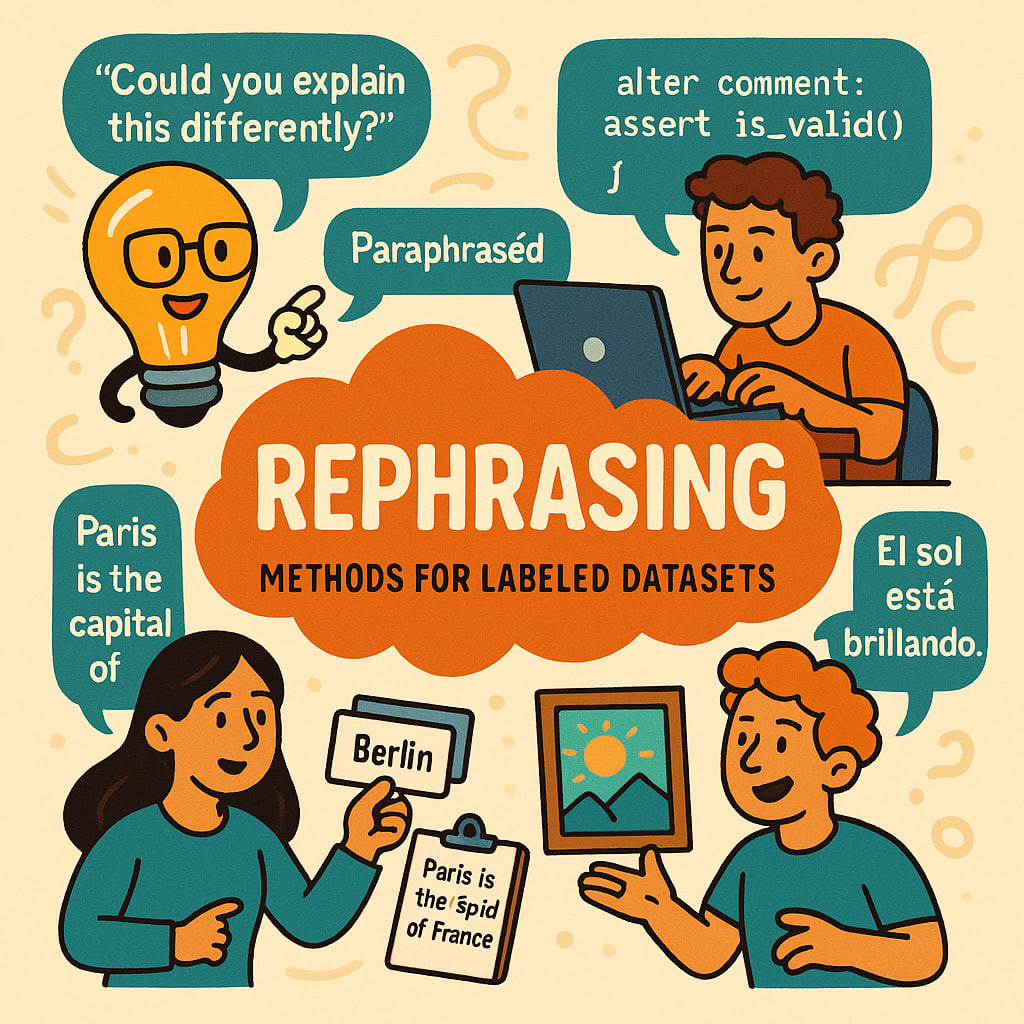
Rephrasing is the most reliable way to expand a labeled dataset without changing its ground truth. At its core, you start from a seed item whose label you trust and produce variants that preserve the same meaning, behavior, or outcome. In language tasks this means paraphrasing instructions, questions, or rationales; in code it means altering comments, identifiers, or scaffolding while keeping unit tests green; in multimodal alignment it means rewriting captions or prompts without altering the depicted facts. Because the goal is invariance under wording changes, rephrasing is best thought of as a label-preserving operator you can apply repeatedly to thicken coverage around important slices.